

Why Your GEO Platform Can't Fix a Positioning Problem

The GEO tools market went from 6 companies to 24 in three months. Over $200 million raised. Profound pulled in $58.5 million. Peec AI closed $29 million total. Bluefish grabbed $24 million. Evertune took $19 million. Fortune 500 logos on every homepage. G2 created an entire new category for them.
And most of their customers are monitoring visibility they don't have.
The Gold Rush Nobody Questioned
Here is what happened. ChatGPT, Perplexity, and Claude started eating Google's lunch. Marketers panicked. A new acronym appeared: GEO, Generative Engine Optimization. Then another one: AEO, AI Engine Optimization. Within weeks, venture capital flooded in.
Profound, Peec AI, Otterly, Scrunch, Goodie, AIO, WrittenBy. Pick a name. They all do roughly the same thing. They monitor whether AI models mention your brand when someone asks a question. They track your "AI visibility score." They show you which competitors get cited instead of you.
The pitch is compelling. AI search is replacing traditional search. You need to know where you stand. Fair enough.
But knowing where you stand and actually being visible are two very different things.
You Bought a Scale When You Needed a Gym
Let me be blunt. If your content has no clear positioning, no structured data, no answer-first formatting, and no founder voice, what exactly are you tracking?
A dashboard full of zeros.
These platforms measure. They do not build. They tell you that ChatGPT does not cite your brand when someone asks about your category. Great. You already knew that. Your pipeline told you that months ago.
The GEO tool market has a fundamental assumption baked in: that visibility is a monitoring problem. It is not. It is a construction problem. You do not need better analytics on your absence. You need to stop being absent.
Buying a GEO platform before fixing your positioning is like buying a scale when you need a gym membership. The scale is not wrong. It is just not going to help you lose weight.
What Actually Drives AI Citations
We have audited over 24 SaaS companies for AI visibility. Here is what the data says about what actually gets you cited by large language models.
Answer-first formatting matters more than anything else. 44.2% of LLM citations come from the first 30% of a page's text. AI models are not reading your entire 3,000-word blog post. They are pulling from the top. If your answer is buried under 400 words of context-setting and throat-clearing, you are invisible.
This is not a monitoring insight. This is a content architecture problem.
Third-party sources dominate. Brands are 6.5 times more likely to be cited through third-party content than through their own website. That means your guest posts, your media mentions, your presence on comparison sites and industry roundups matter more than your blog. Most GEO platforms track your own domain. The citations are happening somewhere else entirely.
But your website still matters structurally. A Reddit-sourced study found that 77% of AI citations trace back to corporate websites as the original source, even when the LLM found the information through a third party. Your site is the foundation. But the foundation needs to be built right.
Structural elements do the heavy lifting. JSON-LD schema markup. FAQ sections with clear question-and-answer formatting. Definition blocks that give AI models clean, extractable statements. These are the elements that make your content machine-readable. Not your tracking dashboard. Not your visibility score. The actual bones of your pages.
None of this shows up in a GEO platform report. Because GEO platforms do not look at why you are invisible. They just confirm that you are.
The Dentist With Bad Teeth
Here is the part that should make the entire GEO industry uncomfortable.
We audited Visto. Visto is a company that literally sells GEO optimization to agencies. Their whole business is helping other companies get visible in AI search.
They had zero schema markup on their own site. Zero.
No JSON-LD. No FAQ schema. No Organization markup. Nothing. A GEO platform with no structured data is like a dentist with bad teeth. It tells you everything you need to know about the gap between selling the solution and actually implementing it.
The tool is not the problem. The system is.
And this is not a shot at Visto specifically. It is a pattern. We see it constantly. Companies investing five figures annually in GEO monitoring platforms while their content sits on sites with no schema, no answer-first formatting, no entity optimization, and no topical authority signals.
They are paying to watch themselves lose.
The Sequence Everyone Gets Wrong
The market has convinced SaaS companies that the sequence is: subscribe to a GEO tool, see where you are missing, then fix things.
That is backwards.
The correct sequence is:
1. Position first. Define what you are the answer to. Not your product category. The specific questions your ideal customers ask that you should own. If you cannot articulate this in one sentence, no GEO tool on earth will help you.
2. Build the content system. Create content that answers those questions directly. Answer-first formatting. Clear definitions. Structured arguments. Founder-driven perspective that gives AI models a reason to cite you over the 47 other companies saying the same generic things.
3. Structure for AI. Implement JSON-LD schema. Add FAQ sections. Create definition blocks. Build the technical infrastructure that makes your content extractable. This is not glamorous work. It is the work that matters.
4. Then monitor. Now your GEO platform has something to track. Now your visibility scores mean something. Now you can see which questions you are winning and which ones need more work.
Skip to step four and you get a really expensive confirmation of what you already know: nobody is talking about you.
The Audit Results Nobody Wants to Hear
We scored those 24 SaaS companies across the structural factors that actually drive AI citations. Schema markup. Answer-first content formatting. Entity optimization. Topical authority signals. Third-party citation presence.
The companies with the most expensive GEO tool subscriptions did not score the highest. Not even close.
Several companies paying $2,000 or more per month for AI visibility monitoring scored under 50 out of 100 on foundational readiness. They had dashboards. They had reports. They had weekly AI visibility emails landing in their CMO's inbox.
They did not have the basics.
Meanwhile, a handful of companies with no GEO tools at all scored above 70. They had done the structural work. They had clear positioning. They had content built to be cited. They just had not gotten around to measuring it yet.
The companies doing the work did not need the dashboard. The companies with the dashboard had not done the work.
The $200 Million Question
More than $200 million has been raised across 24 GEO and AEO platforms in the last year. That is real money chasing a real market shift. AI search is changing how buyers find solutions. That part is true.
But the tools are ahead of the market's readiness. Most SaaS companies do not have a monitoring problem. They have a positioning problem. They have a content architecture problem. They have a structured data problem.
Profound's $58.5 million raise is impressive. Peec AI's $29 million in total funding is significant. Bluefish, Evertune, Otterly, Scrunch, all of them are building real products that will matter.
They will matter after companies do the foundational work.
Right now, the GEO tools market is selling binoculars to people who have not built the thing worth looking at. The binoculars work fine. There is just nothing to see.
What This Means for Your Budget
If you are a SaaS marketing leader evaluating GEO platforms, here is the honest math.
A GEO tool subscription runs anywhere from $500 to $5,000 per month depending on the platform and tier. That is $6,000 to $60,000 per year to monitor your AI visibility.
If your AI visibility foundations are not in place, that spend generates reports about your absence. Reports you could get for free by typing your brand name into ChatGPT yourself.
Redirect that budget. Spend it on positioning work. Spend it on content restructuring. Spend it on schema implementation. Spend it on building the system that creates visibility in the first place.
Then subscribe to the GEO platform. Then the monitoring spend makes sense because you have something to monitor and optimize.
The tools are not the enemy. The sequence is the problem.
FAQ
Do GEO platforms provide any value?
Yes. For companies that have already done the foundational work of positioning, content architecture, and structured data implementation, GEO platforms provide genuine optimization value. They help you see which queries you are winning, where competitors are getting cited instead, and how your visibility changes over time. The problem is subscribing before the foundations exist.
Which GEO platforms are leading the market?
Profound has raised the most at $58.5 million and targets enterprise clients. Peec AI has raised $29 million total and focuses on brand monitoring across AI models. Otterly and Scrunch offer more accessible entry points. The market is moving fast and consolidation is likely.
What is the difference between GEO and AEO?
GEO stands for Generative Engine Optimization. AEO stands for AI Engine Optimization. In practice, they describe the same thing: optimizing your brand's visibility in AI-generated responses. The terminology has not settled yet and both terms are used interchangeably across the industry.
How do I know if my foundations are ready for a GEO platform?
Ask yourself three questions. Does your site have JSON-LD schema markup on key pages? Is your content formatted with answers first and context second? Can you articulate in one sentence the specific question your brand should own in AI search? If the answer to any of these is no, start there before subscribing to monitoring.
What is answer-first formatting?
Answer-first formatting means leading with a direct, clear answer to the question your page targets, then providing supporting context, evidence, and depth below. It mirrors how AI models extract information. They pull from the top of the content, not the bottom. 44.2% of LLM citations come from the first 30% of text on a page.
How long does it take to build AI visibility foundations?
For most SaaS companies, a focused sprint of 6 to 8 weeks covers positioning, content restructuring, and schema implementation. This is not a multi-year project. It is a systems problem with a defined scope. The ongoing work is content production and optimization, which is where GEO platforms start earning their subscription cost.
Stop monitoring visibility you don't have. Book 20 minutes to talk about building the system first.

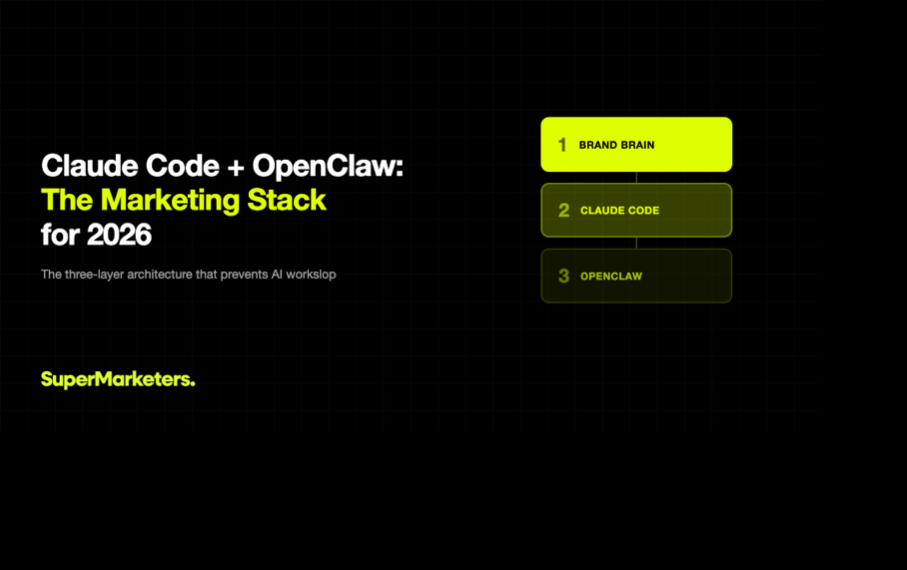
Most founders spend 5-10 hours per week on content and get inconsistent results. Here is the three-layer system that cuts that to 30 minutes.


A data-backed guide to Answer Engine Optimization for B2B SaaS. Based on audits of 24 companies. Includes a 90-day implementation timeline.
Ready to Build Visibility
That Drives Pipeline?
Book a strategy call. We'll audit where you're invisible, show you where competitors are winning, and map out exactly what a visibility system would look like for your business—even if we're not the right fit.
.svg)