Founders and marketers are starting to optimize About pages for AI Search, which is smart.
But the About page is only one part of the answer layer.
When a buyer asks ChatGPT, Claude, Gemini, Perplexity, or Google AI Mode about your category, the answer engine is not only trying to understand who you are.
It is trying to answer the questions a buyer would ask before talking to sales.
Your highest-leverage SaaS pages are no longer only conversion pages. They are source-of-truth pages that help humans, search engines, and AI systems understand what you do, who you are for, how you compare, what proof exists, and what someone should do next.
That means the best AI Search work is not “publish more content.”
It is making the pages you already have more precise, more extractable, more trustworthy, and more useful.
Start with these five pages.
| Page | Buyer question it answers | AI Search job |
|---|---|---|
| Comparison page | Which option is best for my situation? | Own high-intent shortlist and alternative prompts. |
| Pricing page | What does this cost, and what am I committing to? | Reduce pricing ambiguity and outdated third-party answers. |
| Case study | Has this worked for a company like mine? | Turn proof into extractable evidence. |
| Blog post | What should I know, decide, or do? | Answer the question directly and cover fan-out prompts. |
| Homepage | What is this company, and is it relevant to me? | Define the entity, category, ICP, outcome, and next step. |
1. Optimize your comparison pages for buyer-fit questions
Comparison pages are one of the most important AI Search assets for B2B SaaS because they match how buyers actually evaluate software.
They do not ask “what is your brand story.”
They ask “should I use you or the other company.”
They ask “what is the best alternative to the tool we already use.”
They ask “which vendor is better for a 50-person SaaS company with this workflow and this constraint.”
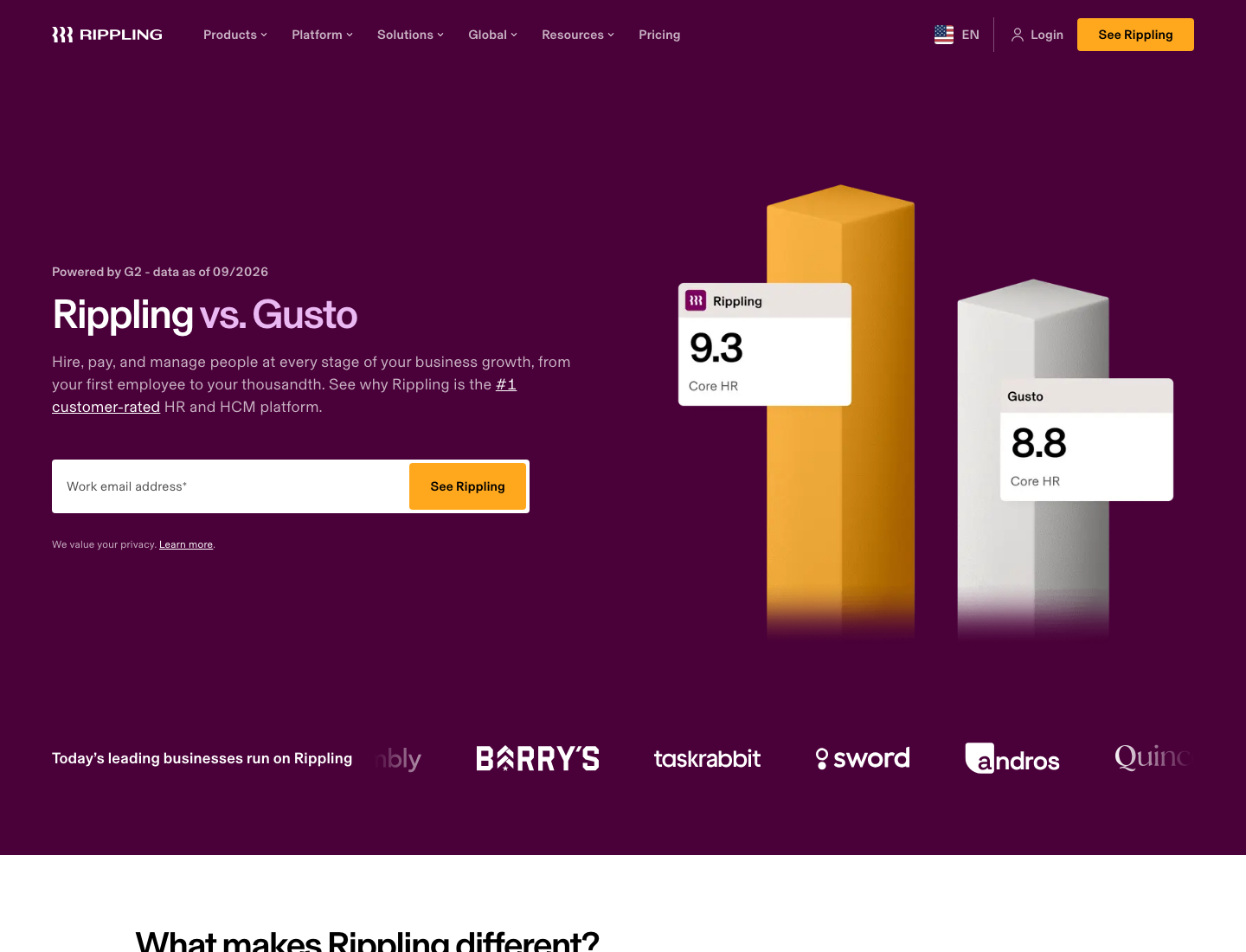
The mistake most SaaS companies make is writing comparison pages like sales rebuttals.
They say “we are better” instead of explaining “we are better for this type of buyer, in this situation, because of these constraints.”
AI systems need the second version.
Use this structure
- Start with a neutral answer that defines both products and the category.
- Add a “best for” table that says who each option fits.
- Add a crawlable feature and use-case comparison table.
- Include a section called “where [competitor] may be better.”
- Include a section called “where [company] is stronger.”
- Use customer proof, review proof, or third-party proof where available.
- Add migration, implementation, pricing, security, support, and fit FAQs.
[COMPANY] and [COMPETITOR] both help [ICP] solve [problem], but they are built for different buyer situations.

[COMPETITOR] is often a good fit for [segment/use case].

[COMPANY] is usually a better fit for [segment/use case] when [constraint], [constraint], and [desired outcome] matter.
The key is not to pretend every buyer should choose you.
The key is to make the boundary clear enough that an answer engine can recommend you for the right situation.
Add these key facts
| Field | What to include |
|---|---|
| Category | The exact software category or service category. |
| Best-fit customer | Company size, team, maturity, and use case. |
| Strongest differentiator | Specific difference that changes the buying decision. |
| Competitor fit | Where the competitor is legitimately strong. |
| Migration path | Who handles migration, timeline, risk, and support. |
| Proof | Customer examples, review data, analyst proof, or quantified outcomes. |
2. Optimize your pricing page for clarity, not only conversion
Pricing pages are no longer only late-stage conversion assets.
They are answer sources.
If your pricing page is vague, AI systems have to infer your cost, packaging, contract model, and buyer fit from whatever else they can find.
That might be a review site.
It might be an outdated marketplace listing.
It might be a Reddit thread from a customer who bought three years ago.
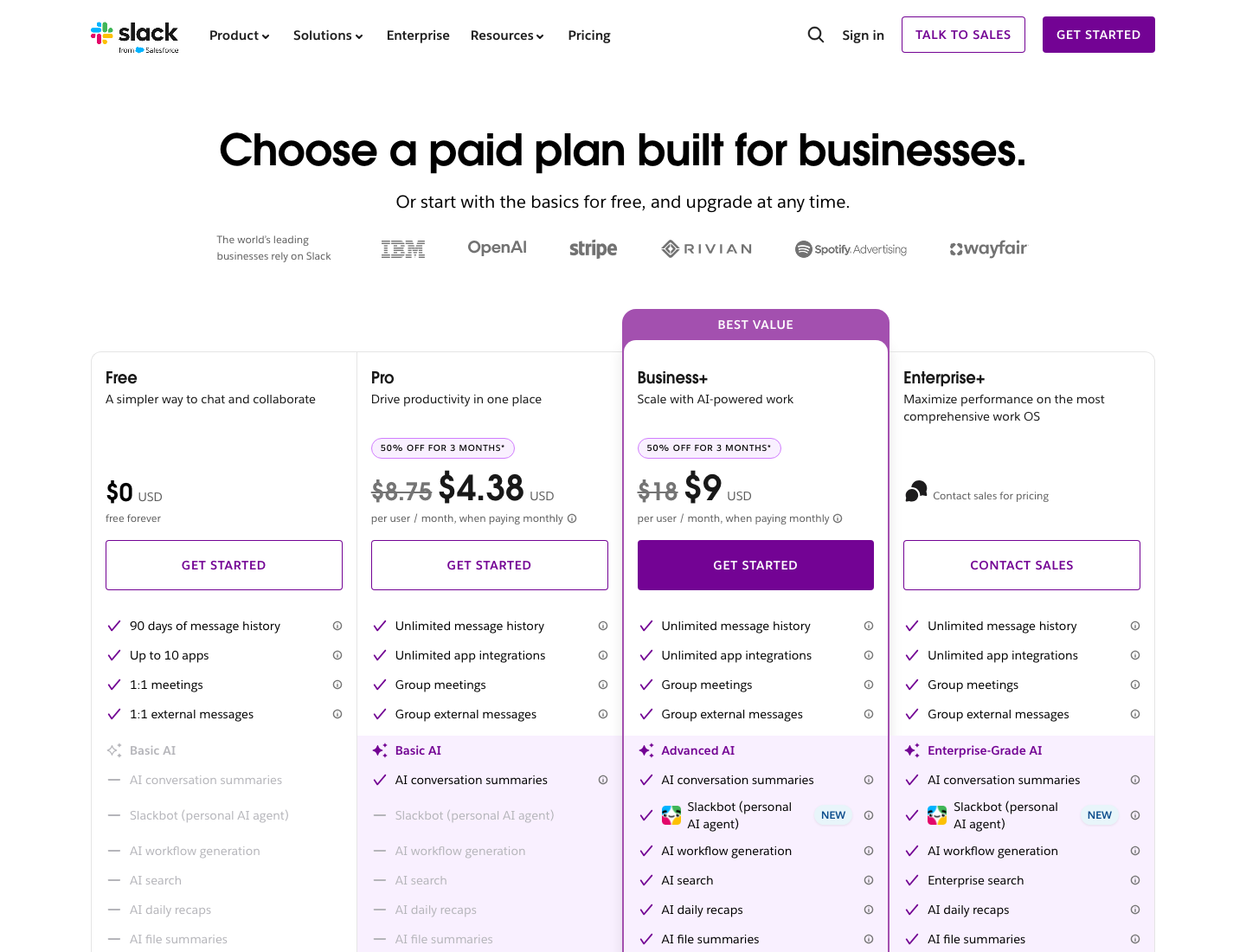
You do not have to publish every enterprise price to make your pricing page useful for AI Search.
You do have to explain the pricing model clearly.
Use this structure
- Start with a plain-English pricing summary.
- Define who each plan or package is for.
- State what affects price.
- Clarify free trial, free plan, monthly, annual, and contract terms.
- Explain implementation, onboarding, support, and usage-based charges.
- Add a “pricing compared to alternatives” section if the category supports it.
- Add FAQs for cancellation, upgrades, downgrades, add-ons, seats, usage, and procurement.
[COMPANY] pricing is based on [pricing unit], with packages for [segment 1], [segment 2], and [segment 3].

Most customers choose [package] when they need [use case].

Pricing can vary based on [seats], [usage], [implementation], [support], and [contract terms].
Add a crawlable pricing facts table
| Pricing fact | Why AI systems need it |
|---|---|
| Starting price | Prevents outdated or speculative cost answers. |
| Free trial or free plan | Answers low-friction evaluation prompts. |
| Contract terms | Helps buyers compare monthly, annual, and enterprise commitments. |
| Implementation fee | Clarifies total cost of ownership. |
| Best-fit package | Connects pricing to buyer maturity. |
| Included support | Answers risk and onboarding objections. |
The point is not to make your pricing page longer.
The point is to make it harder for AI systems to describe your offer incorrectly.
3. Optimize your case studies as proof assets
Most SaaS case studies are written like customer stories.
That is fine for narrative.
It is weak for extraction.
An AI system trying to answer “which tools work for companies like mine” needs more than a nice quote.
It needs customer type, industry, company size, problem, use case, product used, timeframe, result, and confidence that the result belongs to the work described.
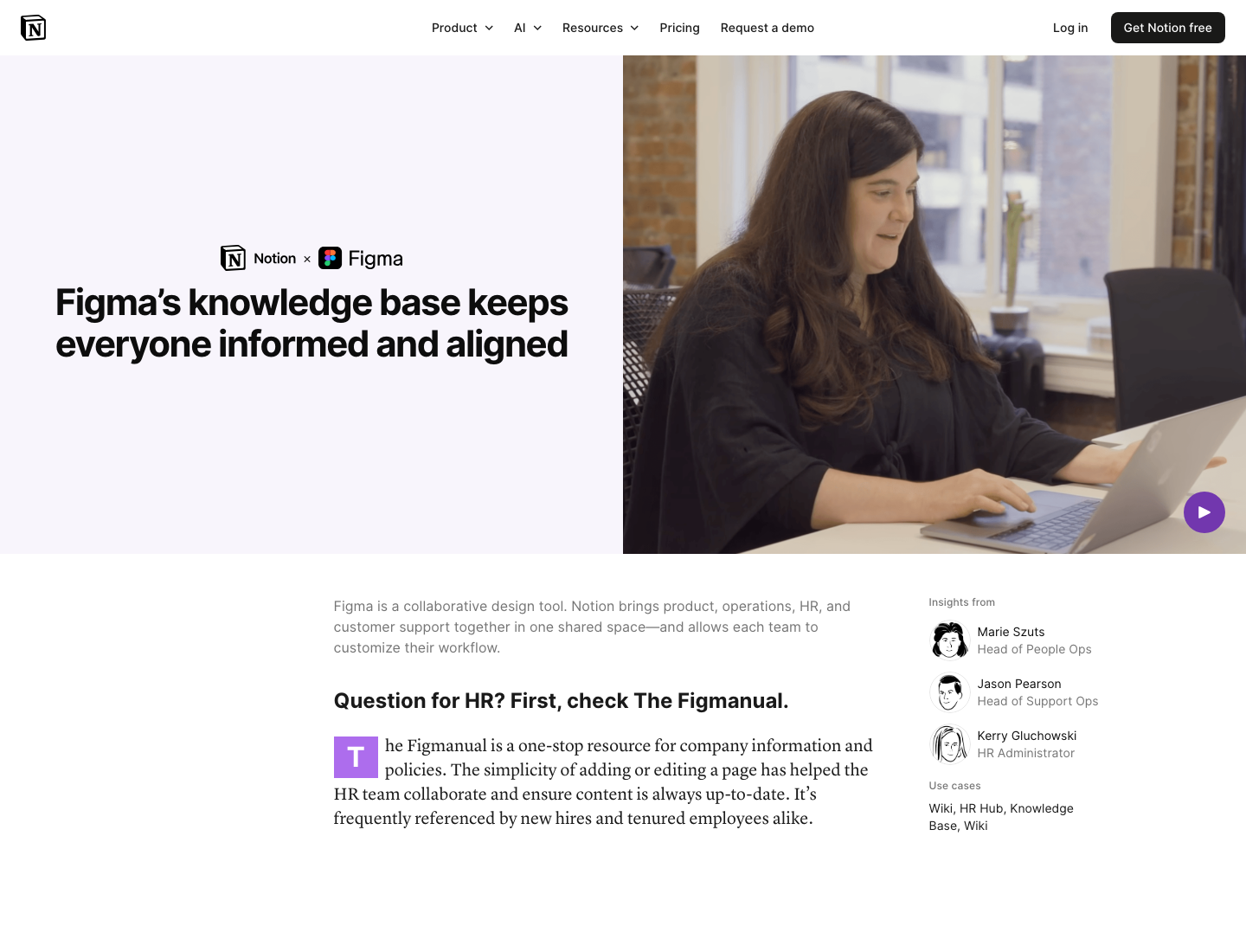
The best case studies serve three audiences at once.
They reassure the buyer.
They equip sales.
They feed AI systems a structured proof point that can be reused in category answers.
Use this structure
- Start with a two-sentence summary of the customer, problem, solution, and result.
- Add a customer profile table near the top.
- Define the before-state in concrete terms.
- Explain what changed and who was involved.
- Show measurable outcomes with timeframe.
- Include quotes with name, title, and company context.
- Add a “why this matters for [ICP]” section.
- Add FAQs about implementation, timeline, team involvement, and fit.
[CUSTOMER] is a [category/company type] with [team size or relevant scale].

Before [COMPANY], the team struggled with [problem].

After implementing [solution], they achieved [specific result] in [timeframe].
Add this case study facts table
| Field | Example |
|---|---|
| Customer | Figma, Linear, Clay, Ramp, or another named customer. |
| Industry | Design software, fintech, HR tech, developer tools. |
| Company size | Employee count, customer count, revenue band, or relevant scale. |
| Use case | Knowledge base, onboarding, pipeline generation, support deflection. |
| Problem | What was slow, broken, expensive, risky, or unclear. |
| Solution | What changed operationally, not only what product was purchased. |
| Result | Metric, timeframe, and confidence level. |
If the result is not quantified, say that.
Do not turn vague customer happiness into fake performance proof.
AI Search rewards trust signals, but only if they are credible.
4. Optimize blog posts around answer blocks and fan-out questions
SEO-trained marketers often write blog posts like they are slowly walking the reader toward an answer.
AI Search rewards the opposite.
Answer the question early.
Then support the answer with proof, examples, nuance, and related questions.
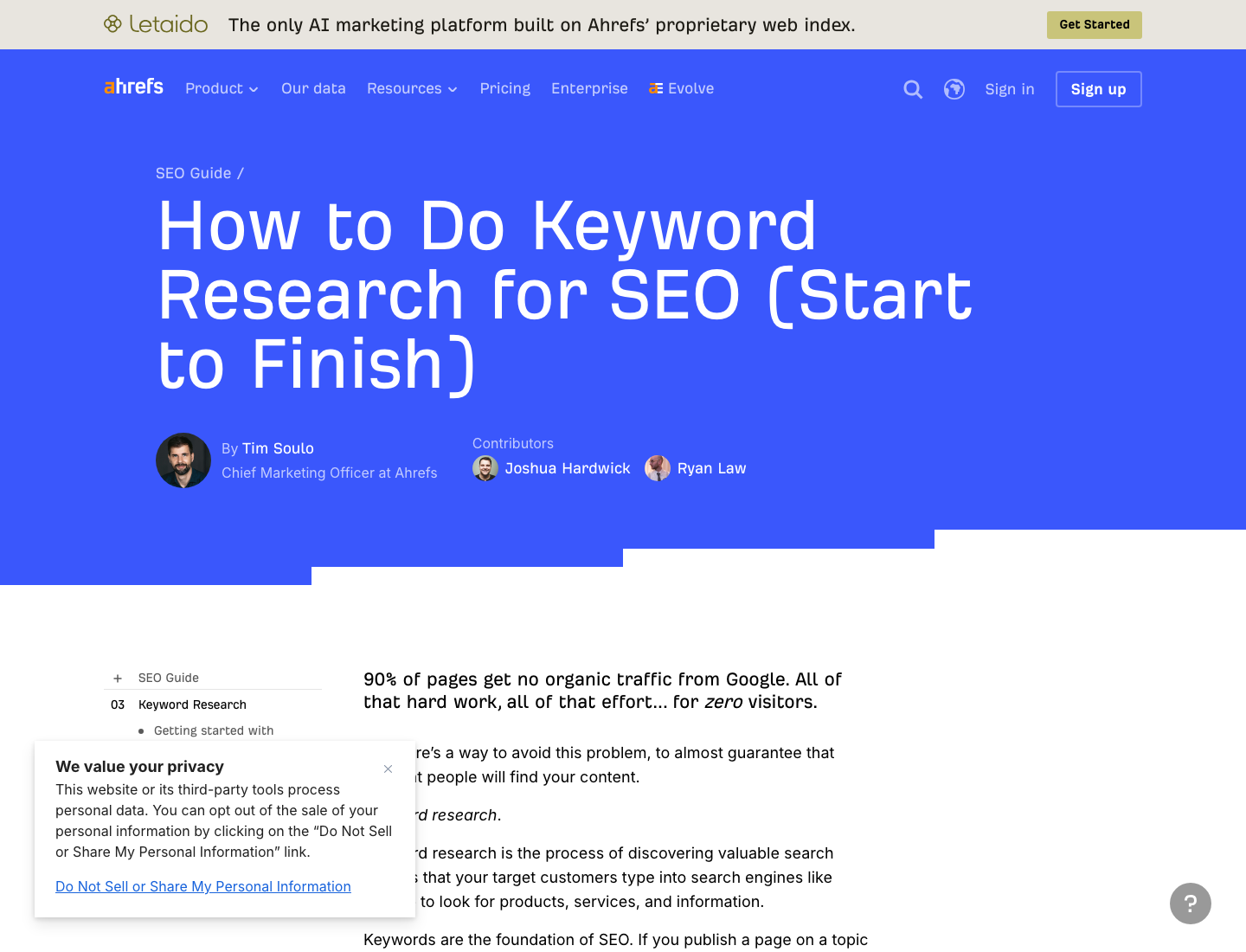
A blog post optimized for AI Search should not begin with generic scene-setting.
It should begin with the answer a buyer came for.
Then it should cover the follow-up questions that buyer would ask after reading the answer.
Use this structure
- Use the target question or decision as the H1.
- Answer it directly in the first 50 to 100 words.
- Use question-based H2s.
- Answer every H2 immediately before expanding.
- Add comparison tables, checklists, examples, and decision rules.
- Add cited sources when the claim depends on external evidence.
- Add FAQs based on likely fan-out prompts.
- End with a practical next action.
Bad opening:
In today's fast-paced digital landscape, [topic] has become increasingly important.

Better opening:
[Topic] is [definition]. It matters for [ICP] because [specific consequence]. The fastest way to improve it is [action], but the right approach depends on [constraint].
Build the post from fan-out prompts
Every serious AI Search brief should include fan-out questions.
If the primary question is “what is the best customer support platform for SaaS,” the fan-out questions include pricing, implementation, integrations, AI agent quality, ticketing depth, migration, reporting, and which tools are best for startups versus enterprises.
Those are not random FAQs.
They are the next questions an answer engine needs to resolve before it can recommend anything confidently.
5. Optimize your homepage as the entity source of truth
Your homepage is the page most likely to define your company for buyers and crawlers.
It should not make people infer the basics.
It should state what you do, who it is for, what category you are in, what outcome you create, why you are different, and what someone should do next.
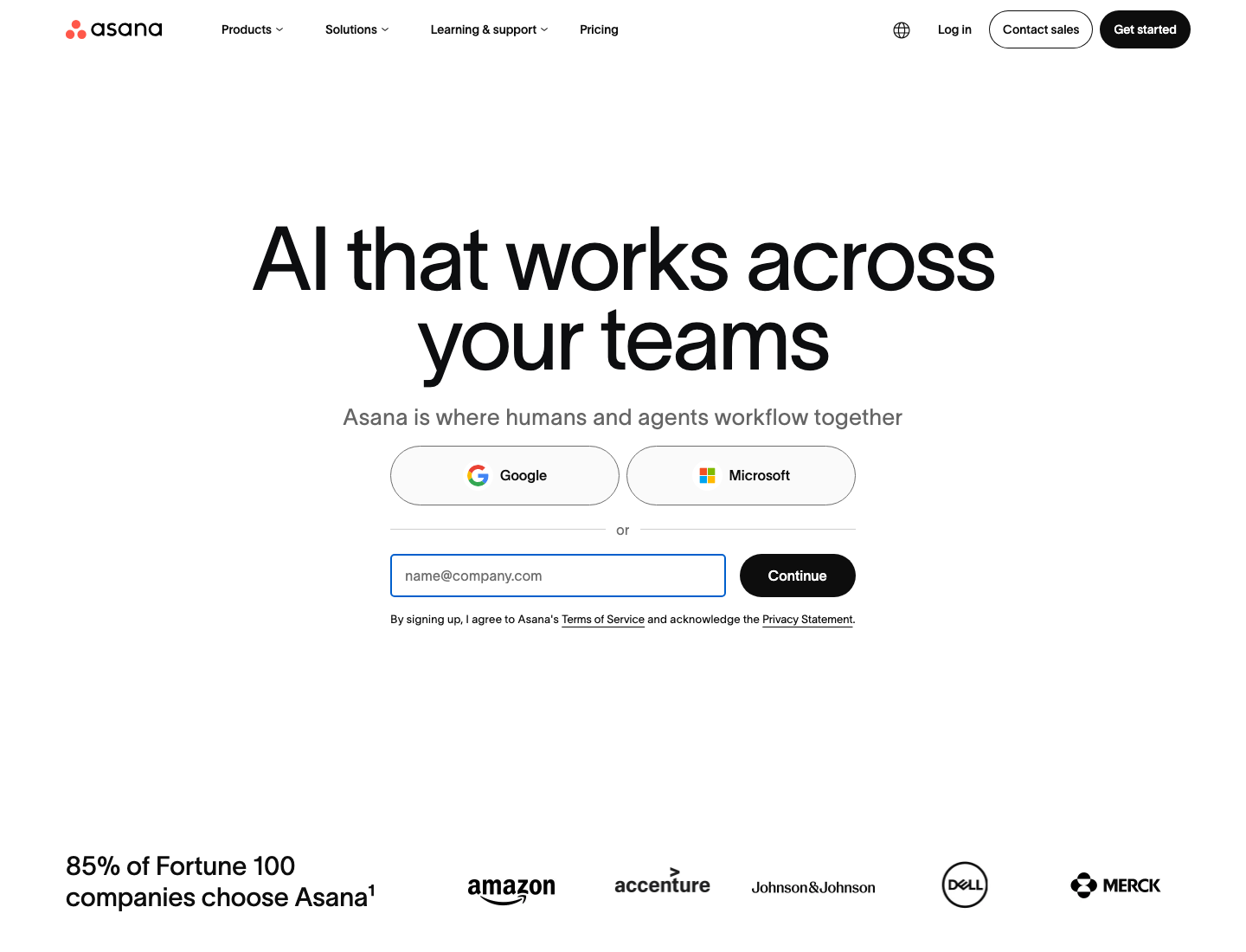
The homepage is where vague positioning creates the most downstream damage.
If your homepage says “unlock growth with intelligent solutions,” nobody knows what category you belong to.
That includes AI systems.
Your homepage should answer these 12 questions
- What do you do?
- Who is it for?
- What problem do you solve?
- What outcome do customers get?
- What category are you in?
- What makes you different?
- Why should buyers trust you?
- What use cases do you support?
- What proof do you have?
- How does the product or service work?
- What should someone do next?
- What facts should AI know about your company?
[COMPANY] is a [category] for [ICP] that helps [team/persona] achieve [outcome] without [pain or tradeoff].
Add a company facts block
Some companies should put this on the homepage.
Others should link it from the footer or About page.
Either way, make the facts crawlable and easy to extract.
| Fact | Example answer |
|---|---|
| Company name | SuperMarketers |
| Category | AI visibility and demand generation partner for B2B SaaS. |
| ICP | Seed to Series B B2B SaaS companies. |
| Core offering | Visibility systems, AEO audits, founder-led content systems, and pipeline-focused content operations. |
| Founder | Gen Furukawa. |
| Headquarters | Austin, Texas. |
| Pricing model | Audit entry point and monthly retainers. |
| Competitors | Relevant agencies, consultancies, and AI visibility platforms. |
| Social profiles | LinkedIn, YouTube, newsletter, or other active channels. |
The page-by-page AI Search checklist
If you only take one thing from this guide, take this.
Every important SaaS page should have a clear answer, structured facts, proof, and follow-up questions.
| Requirement | What it means |
|---|---|
| Clear answer | The page answers the buyer's main question in plain language near the top. |
| Structured facts | Important facts appear in tables, definition lists, bullets, or clean headings. |
| Specific proof | Claims are backed by examples, customers, reviews, screenshots, metrics, or credible sources. |
| Fit boundaries | The page says who the offer is for and who it may not be for. |
| Fan-out coverage | The page answers the next questions a buyer or AI engine would ask. |
| Human credibility | The page shows real people, authorship, customer context, and current information. |
What average marketers will misunderstand
They will treat AI Search optimization as a formatting project.
They will add FAQs, tables, schema, and slightly clearer headings, then wonder why nothing changes.
Formatting helps only when the underlying answer is useful.
The strategic job is to make your site the best source for the questions your buyers ask before sales ever enters the conversation.
What to do next
Pick one page from the five above.
Do not start with the page that is easiest to edit.
Start with the page closest to revenue.
For most B2B SaaS companies, that means the comparison page or pricing page.
For companies with strong customer proof, it may be the case study library.
For companies with unclear positioning, it is the homepage.
Run this audit:
- Can a smart buyer understand the answer in 30 seconds?
- Can an answer engine extract the core facts without guessing?
- Does the page include proof that would survive outside your own marketing copy?
- Does the page explain who you are best for and where you are not the best fit?
- Does the page answer the follow-up questions buyers ask next?
If the answer is no, the page is not only under-optimized for AI Search.
It is under-optimized for the way buyers already make decisions.
Frequently asked questions
Which SaaS website pages matter most for AI Search?
The highest-leverage pages are comparison pages, pricing pages, case studies, blog posts, and homepages because they answer the questions buyers and AI systems repeatedly ask.
Those pages explain who the product is for, how it compares, what it costs, what proof exists, and what problem it solves.
Should every SaaS company publish comparison pages?
Most B2B SaaS companies should publish comparison or alternative pages if buyers already compare them to known products.
The page should be honest, specific, and buyer-fit oriented rather than a one-sided takedown.
Do pricing pages need exact prices to work for AI Search?
No, but they need clear pricing logic.
If you cannot publish exact enterprise pricing, explain the pricing unit, what affects cost, contract terms, implementation costs, and which package fits which buyer.
What makes a case study useful for answer engines?
A useful case study includes a clear customer profile, problem, solution, timeframe, measurable results, quotes, use cases, and products used.
The more structured the proof, the easier it is for AI systems to reuse accurately.
Is schema enough to improve AI Search visibility?
No.
Schema can help clarify structure, but it cannot rescue vague positioning, weak proof, thin examples, or missing answers.