

Schema Markup for AEO: Which Types Actually Get You Cited by AI


Schema markup is the technical foundation of Answer Engine Optimization. It tells AI systems exactly what your content is, who created it, and what questions it answers — eliminating guesswork from the extraction process. Sites implementing 3 or more schema types see 13% higher citation rates in AI-generated answers, according to Schema App's 2024 research. That's not marginal. That's the gap between visibility and invisibility.
I'm Gen Furukawa, founder of SuperMarketers. This guide covers which schema types actually matter for AEO, how to implement them, and what most B2B SaaS companies get wrong.
For context on how schema fits into the broader AEO strategy, see our complete AEO guide.
Why Does Schema Markup Matter for AI Citations?
Schema markup matters because AI systems use structured data to understand content with higher confidence and lower processing cost. When your page includes FAQPage schema, an AI system doesn't need to guess whether a section is a question-answer pair — it knows. That certainty translates directly into higher citation probability.
Think of schema as a translation layer between your content and AI systems. Without it, AI models parse your HTML and make inferences about structure. With it, you're handing them a clean data model.
The 13% citation uplift from 3+ schema types compounds across pages. A 100-page site with comprehensive schema markup has dramatically higher overall AI visibility than a competitor with identical content but no structured data.
Google has been encouraging schema adoption for years. AI answer engines have made it essential.
Which Schema Types Matter Most for B2B SaaS AEO?
The six highest-impact schema types for B2B SaaS AEO are FAQPage, Article, Organization, Person, HowTo, and SoftwareApplication. Each serves a distinct purpose in helping AI systems understand, trust, and cite your content. Prioritize implementation in this order.
FAQPage Schema
Impact: Highest. FAQPage schema marks up question-answer pairs so AI systems can extract them directly. Combined with well-written FAQ sections, this is the single highest-leverage AEO technical optimization.
{
  "@context": "https://schema.org",
  "@type": "FAQPage",
  "mainEntity": [{
    "@type": "Question",
    "name": "What is Answer Engine Optimization?",
    "acceptedAnswer": {
      "@type": "Answer",
      "text": "Answer Engine Optimization (AEO) is the practice of structuring content so AI systems cite your brand when answering questions your buyers ask."
    }
  }]
}
Best practices:
- Include 5-10 questions per page
- Keep answers to 40-60 words
- Use conversational question phrasing
- Match questions to how your buyers actually ask them
Article Schema
Impact: High. Article schema identifies your content type, author, publish date, and modification date. This helps AI systems evaluate freshness and authority.
{
  "@context": "https://schema.org",
  "@type": "Article",
  "headline": "Your Article Title",
  "author": {
    "@type": "Person",
    "name": "Gen Furukawa",
    "url": "https://supermarketers.ai/about"
  },
  "datePublished": "2025-01-15",
  "dateModified": "2025-02-01",
  "publisher": {
    "@type": "Organization",
    "name": "SuperMarketers"
  }
}
Key fields: Always include author, datePublished, and dateModified. AI systems use these to evaluate content recency and authoritativeness.
Organization Schema
Impact: High. Organization schema establishes your brand entity — name, description, logo, social profiles, founding date. This feeds directly into how AI systems build their internal knowledge of your company.
Implement this site-wide, not just on your About page. Consistent Organization schema across your entire domain reinforces entity recognition.
Person Schema
Impact: Medium-High. Person schema builds author authority. When AI systems can clearly identify who wrote a piece and verify their credentials, citation confidence increases.
Link Person schema to author pages that include credentials, social profiles, and publication history. This creates a verifiable identity that AI systems can cross-reference.
HowTo Schema
Impact: Medium. HowTo schema structures step-by-step content for easy extraction. AI systems frequently answer "how to" questions, and this schema type makes your process content the cleanest source to cite.
Use for: implementation guides, setup instructions, audit frameworks, optimization processes.
SoftwareApplication Schema
Impact: Medium for SaaS companies. SoftwareApplication schema describes your product — features, pricing model, operating system, category. This matters when AI systems answer product comparison and recommendation queries.
{
  "@context": "https://schema.org",
  "@type": "SoftwareApplication",
  "name": "Your Product Name",
  "applicationCategory": "BusinessApplication",
  "operatingSystem": "Web",
  "offers": {
    "@type": "Offer",
    "price": "0",
    "priceCurrency": "USD"
  }
}
How Do You Implement Schema Markup for AEO?
Implement schema markup through JSON-LD scripts in your page headers, starting with Organization (site-wide), then Article and FAQPage (per page), then Person, HowTo, and SoftwareApplication as relevant. Use Google's Rich Results Test and Schema.org's validator to verify implementation.
Step 1: Audit existing schema. Run your top 20 pages through Google's Rich Results Test. Note what's present and what's missing.
Step 2: Implement Organization schema site-wide. Add to your site header or layout template. This is a one-time implementation.
Step 3: Add Article schema to every blog post and content page. Most CMS platforms (WordPress, Webflow, HubSpot) have plugins or built-in support. Ensure author, dates, and publisher are populated.
Step 4: Add FAQPage schema to pages with FAQ sections. Every page should have an FAQ section (5-10 questions). Mark each one up with FAQPage schema.
Step 5: Layer additional schema types. Add HowTo to process content, SoftwareApplication to product pages, Person to author pages.
Step 6: Validate and monitor. Test every page after implementation. Set up monitoring to catch schema errors from CMS updates or template changes.
What Are the Most Common Schema Mistakes for AEO?
The most common mistakes are incomplete implementation (adding schema to some pages but not others), stale dates (never updating dateModified), missing author information, and using schema without matching visible content. AI systems cross-reference schema against page content — mismatches hurt credibility.
Mistake 1: Schema without content. Adding FAQPage schema to a page without a visible FAQ section. Google penalizes this, and AI systems learn to distrust your structured data.
Mistake 2: Generic Organization schema. Using a one-line company description instead of a comprehensive entity definition. Include your category, founding date, key personnel, and specializations.
Mistake 3: Ignoring dateModified. AI systems weight recency. If your dateModified shows 2022 on a page about 2025 best practices, you lose credibility.
Mistake 4: No Person schema for authors. Anonymous content gets cited less. Named, verified authors with Person schema build the authority AI systems need to confidently cite a source.
For a complete assessment of your schema implementation, use our AEO audit framework.
Frequently Asked Questions
How many schema types do I need for AEO?
Implement at least three schema types across your site for meaningful AEO impact. Start with Organization (site-wide), Article (all content pages), and FAQPage (all pages with FAQ sections). Sites with 3+ schema types see 13% higher citation rates in AI answers according to Schema App's 2024 research.
Does schema markup guarantee AI citations?
No. Schema markup increases citation probability by making your content more extractable and trustworthy to AI systems. But content quality, entity authority, and topical relevance still matter. Schema is the technical enabler — not a substitute for genuinely useful content.
Can I add schema markup to an existing site without a redesign?
Yes. JSON-LD schema is added via script tags in your page headers — no visual or structural changes required. Most CMS platforms support this through plugins (WordPress), custom code blocks (Webflow), or built-in modules (HubSpot). Implementation typically takes 1-2 weeks for a full site.
How do I test if my schema markup is working?
Use Google's Rich Results Test (search.google.com/test/rich-results) and Schema.org's validator (validator.schema.org) to verify your markup. For AEO-specific testing, ask AI systems questions that should trigger citations from your marked-up content and check whether you appear.
Does schema markup also help with traditional SEO?
Yes. Schema markup powers rich snippets in Google SERPs — FAQ dropdowns, how-to cards, review stars. This increases click-through rates and visibility in traditional search. SEO and AEO share 80% of the same foundation, and schema markup benefits both.
Get Your Schema Markup Right
Schema implementation is technical, but it's not optional for AEO. At SuperMarketers, we handle the full technical stack — from schema audit to implementation to monitoring — as part of our AI visibility systems for B2B SaaS.
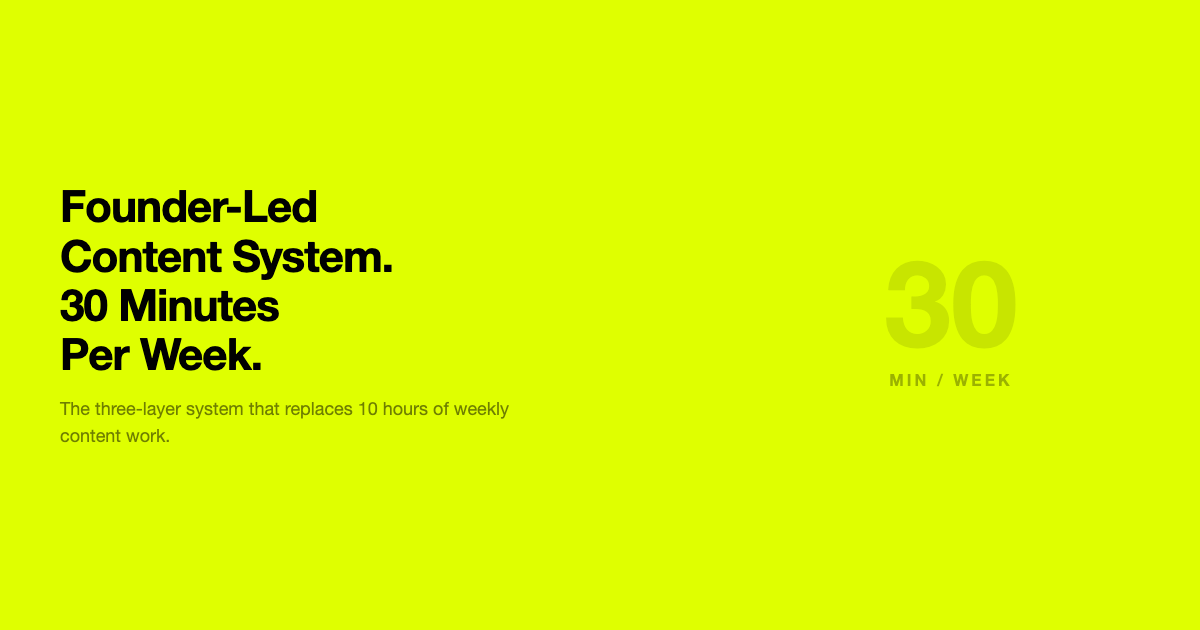
Most founders spend 5-10 hours per week on content and get inconsistent results. Here is the three-layer system that cuts that to 30 minutes.


A data-backed guide to Answer Engine Optimization for B2B SaaS. Based on audits of 24 companies. Includes a 90-day implementation timeline.
Ready to Build Visibility
That Drives Pipeline?
Book a strategy call. We'll audit where you're invisible, show you where competitors are winning, and map out exactly what a visibility system would look like for your business—even if we're not the right fit.
.svg)