Tim Denning posted this on X earlier this week, and I've been thinking about it since:
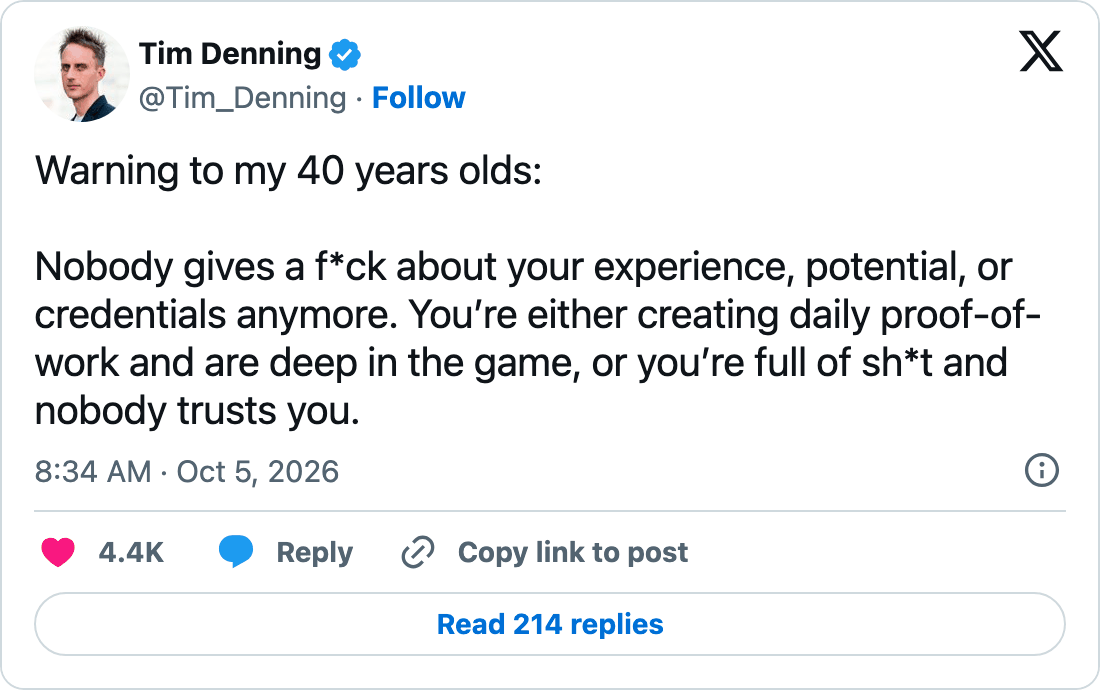
The phrase that stuck with me is "proof-of-work," because AI has quietly changed what counts as proof. The things that used to signal competence, like a polished landing page, a strategy deck or a well-written case study, can now be produced in a morning by anyone with a ChatGPT subscription. In my corner of the market, nearly every agency and consultant now says they build AI marketing systems, and from the outside there's no real way to tell who actually does.
So I tried to answer Tim's point for myself and work out what my proof-of-work is.
I have client results I'm proud of: Intryc doubled its AI visibility in 28 days, and Oyster got 11× more AI citations without publishing a new page. But a case study is still me describing what happened, and you can't look inside it. The more convincing thing I could offer was the system itself, so I've put the one I sell to clients on GitHub, free for anyone to read, copy and use.
The rest of this post walks through it. I'm assuming you've never used GitHub, since most marketers haven't, and you won't need any technical background to follow along.
First: what is GitHub, and what's a repo?
GitHub is a website where people store and share projects made of files. Most of those projects are software, but plenty aren't.
A repo (short for repository) is one project: a folder of files with a history of every change ever made to it. Mine is called marketing-agents.
The files in this one are mostly plain text that you can read in your browser, and you don't need to write code or create an account to look around.
Here's the repo, with the parts that matter numbered:
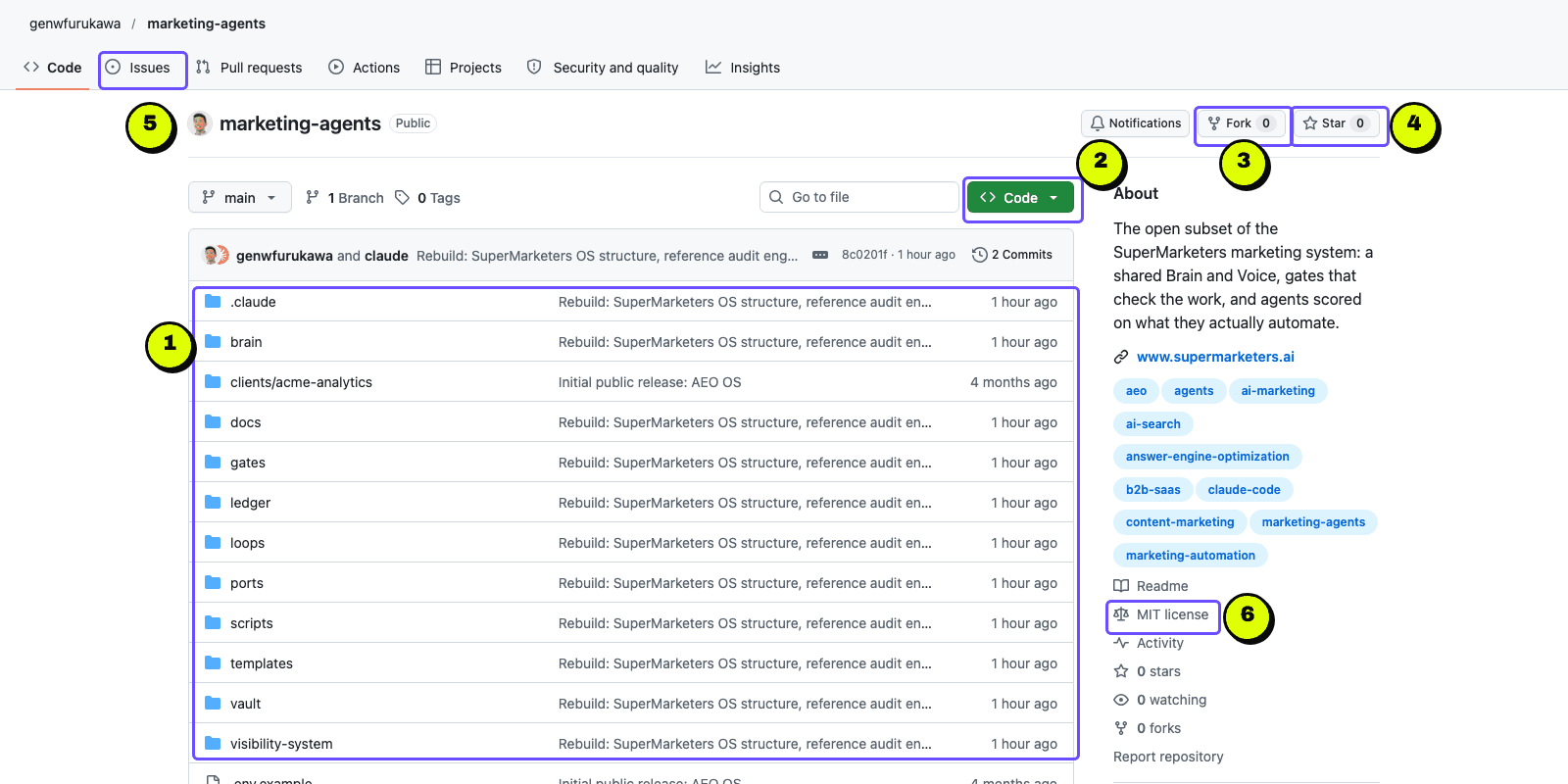
- The folders. Click any one to open it. Each folder is a piece of the system (more on what's inside below).
- The green Code button. This is how you download everything.
- Fork. Makes your own copy under your own GitHub account, so you can change it.
- Star. A bookmark. It also tells me someone found it useful.
- Issues. Where you ask a question or suggest an improvement.
- MIT license. The legal part, in plain English: you can use it, change it, and even sell work built on it. Just keep the license file in your copy.
Scroll down on the repo page and you'll see the README, the project's welcome page. Every folder has its own README too.
What's in there
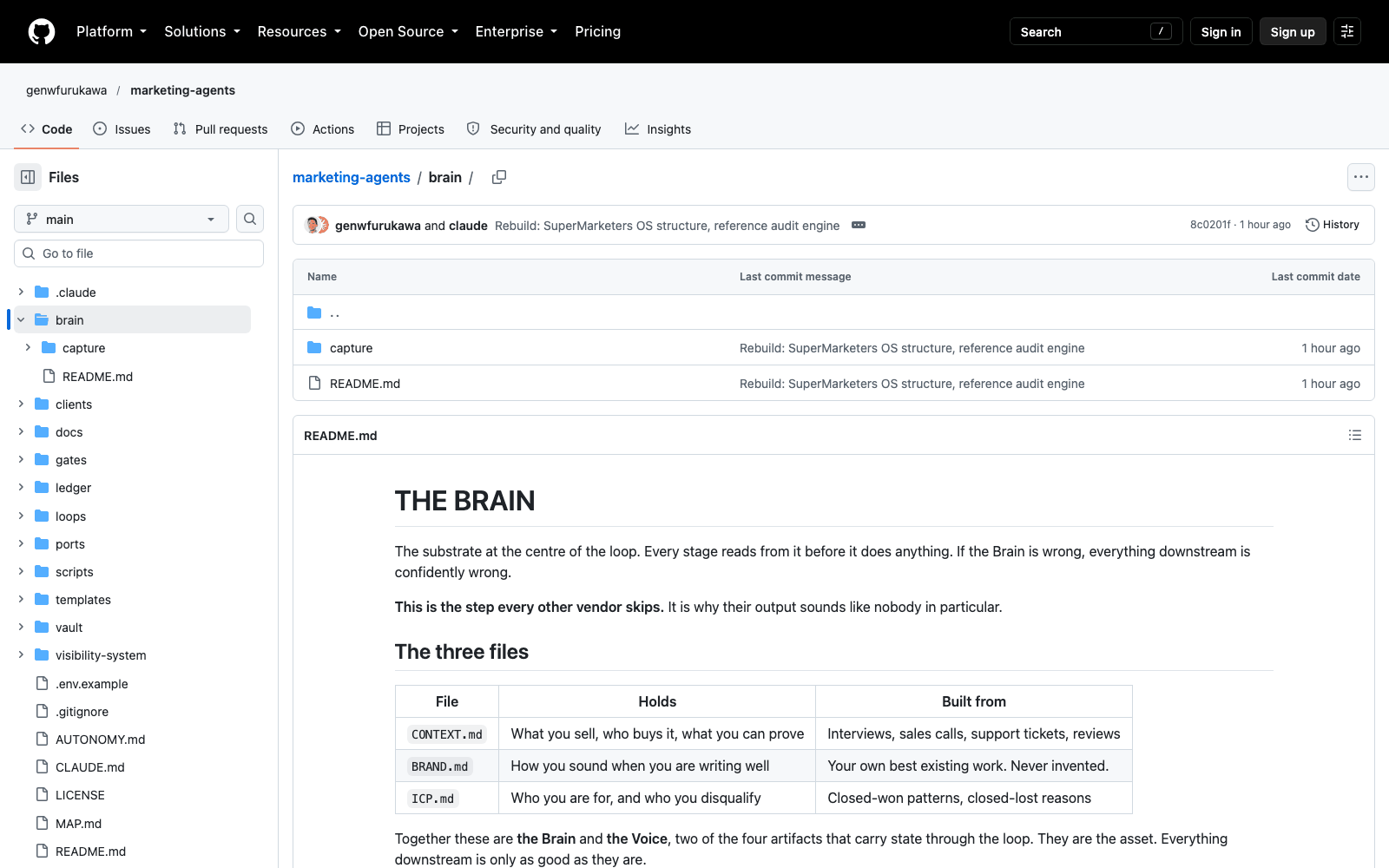
The repo has five main pieces, listed here in the order you'd use them.
brain/: the memory. Before any AI writes anything for you, it should know what you sell, who buys it, what you can prove, and how you sound. That's three files: CONTEXT.md, BRAND.md, and ICP.md. The capture/ folder holds the guides that fill them: a founder interview, sales call mining, review mining, and voice extraction.
Most AI marketing setups skip this step, which is a big part of why their output tends to sound like it could have come from any company.
gates/: the quality checks. Six checks every draft passes before a human reads it: source, fabrication, voice, structure, fit, and risk.
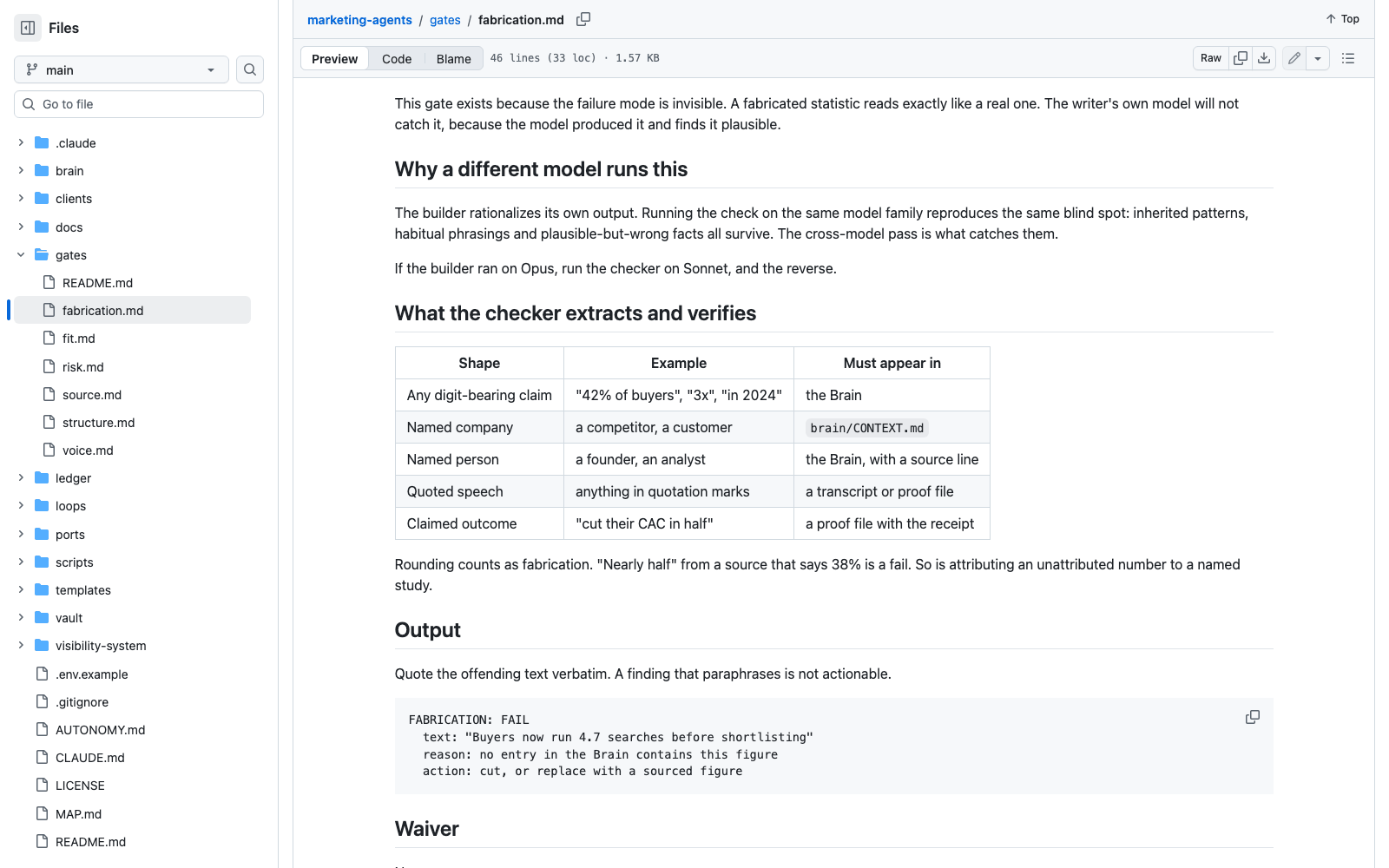
The one I'd point most people to is the fabrication gate. Any number, company name, quote or claimed result in a draft has to trace back to the Brain or a proof file, or the draft fails. The check also runs on a different AI model from the one that wrote the draft, because a model that invented a statistic will usually find it plausible when it rereads its own work.
loops/: one workflow per service. Content, social, demand, and AI search. Each one runs the same five stages: capture, build, approve, ship, improve.
ledger/: the monthly report. One page: what shipped, what it replaced, what it produced, what's next.
AUTONOMY.md: the honest score.
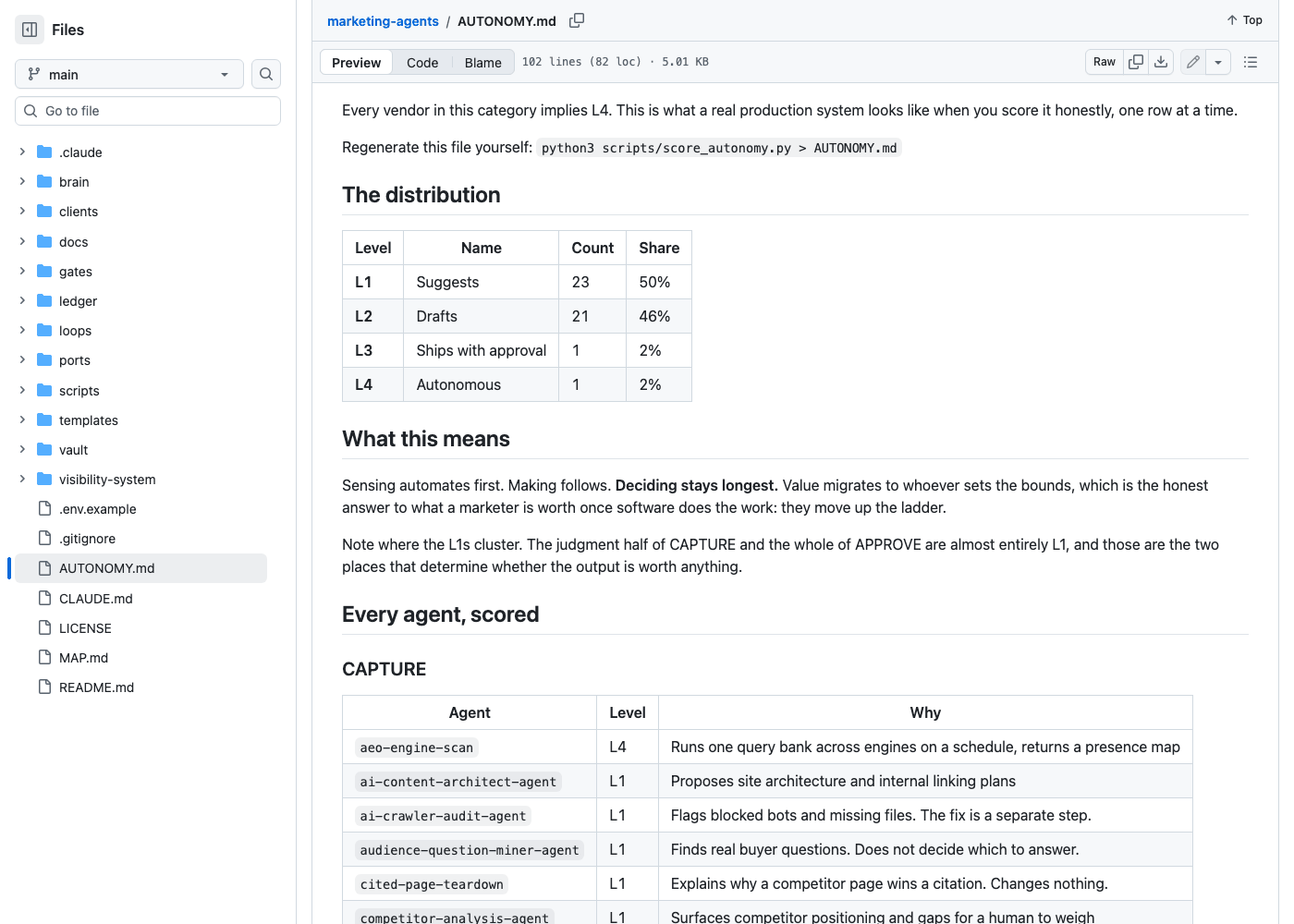
Every agent in the repo is scored from L1 (it suggests) to L4 (it runs on its own). 44 of the 46 are L1 or L2, meaning they either suggest options or produce drafts, so a person still decides or ships 96% of the work.
I wanted that number to be public. A lot of AI marketing is sold with the implication that agents will run your marketing for you, but when you score a real production system one agent at a time, most of the judgment still sits with people, and I think buyers should know that before they hire anyone.
How to use it (no GitHub experience needed)
There are three ways to use it, depending on how technical you want to get.
Option 1: just read it
Open the repo and click around, starting with brain/ and then gates/. Everything is readable in your browser, and even just reading those two folders gives you a useful checklist for any AI content process you already run.
Option 2: download it and use it with ChatGPT or Claude
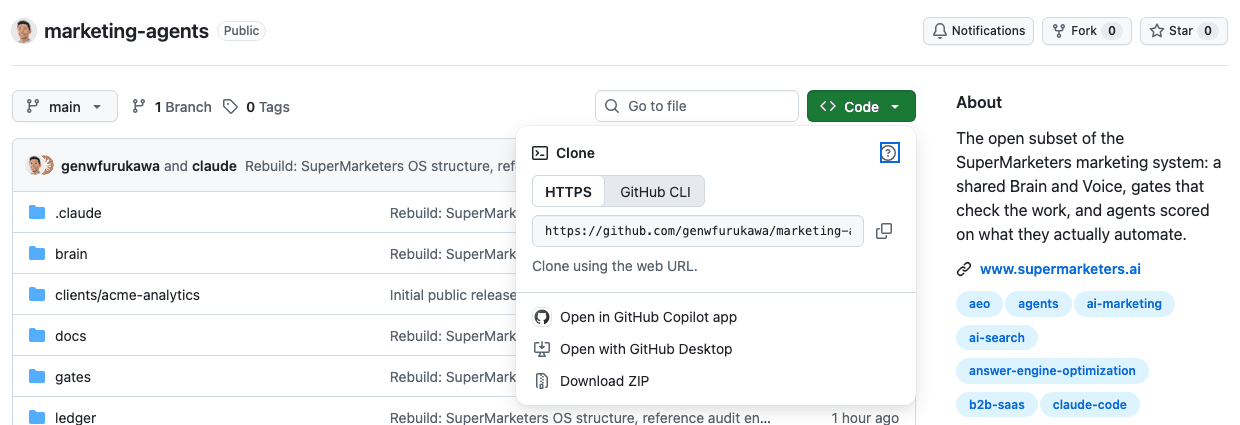
- Click the green Code button.
- Click Download ZIP.
- Unzip it. Every file is plain text (the
.mdending means Markdown, which is text with light formatting). - In ChatGPT or Claude, create a Project and upload the files from
brain/capture/andgates/.
Then paste in these prompts, in this order.
Build your Brain:
Use the founder interview guide in the files I uploaded. Interview me one
question at a time. When we're done, write a CONTEXT document: what we
sell, who buys it, and what we can prove. Mark anything I can't back up
as unproven.
Extract your voice:
Using the voice extraction guide, read these three pieces of my best
writing: [paste them]. Write a BRAND document describing how I sound.
Only use patterns that appear in the samples. Don't invent anything.
Check a draft before you publish it:
Run the fabrication gate and the voice gate on this draft: [paste it].
List every failure, quoting the exact text, before suggesting any fixes.
If you only try one of these, try the last one on the next AI draft your team produces and look at what it flags.
Option 3: run the full system with Claude Code
If you're comfortable with a terminal, this is how I use it day to day. Claude Code is an AI agent that works directly with the files on your computer.
git clone https://github.com/genwfurukawa/marketing-agents.git
cd marketing-agents
claude
The first line downloads the repo, the second moves into its folder, and the third starts Claude Code there so it can read every file.
The experiment: can an AI agent pick it up cold?
One reason I chose GitHub is that AI agents read it, so I wanted to see how well an agent could understand the repo without any help from me.
I downloaded the public repo into an empty folder, the way a stranger would, and gave Claude Code one prompt with read-only access:
I run marketing at a B2B SaaS company with a small team. Using only the
files in this repository, answer in under 200 words: (1) what this system
is, in one sentence; (2) the order I should work in; (3) exactly what to
do first this week, naming the files to open. No hype.
It answered in 19 seconds:
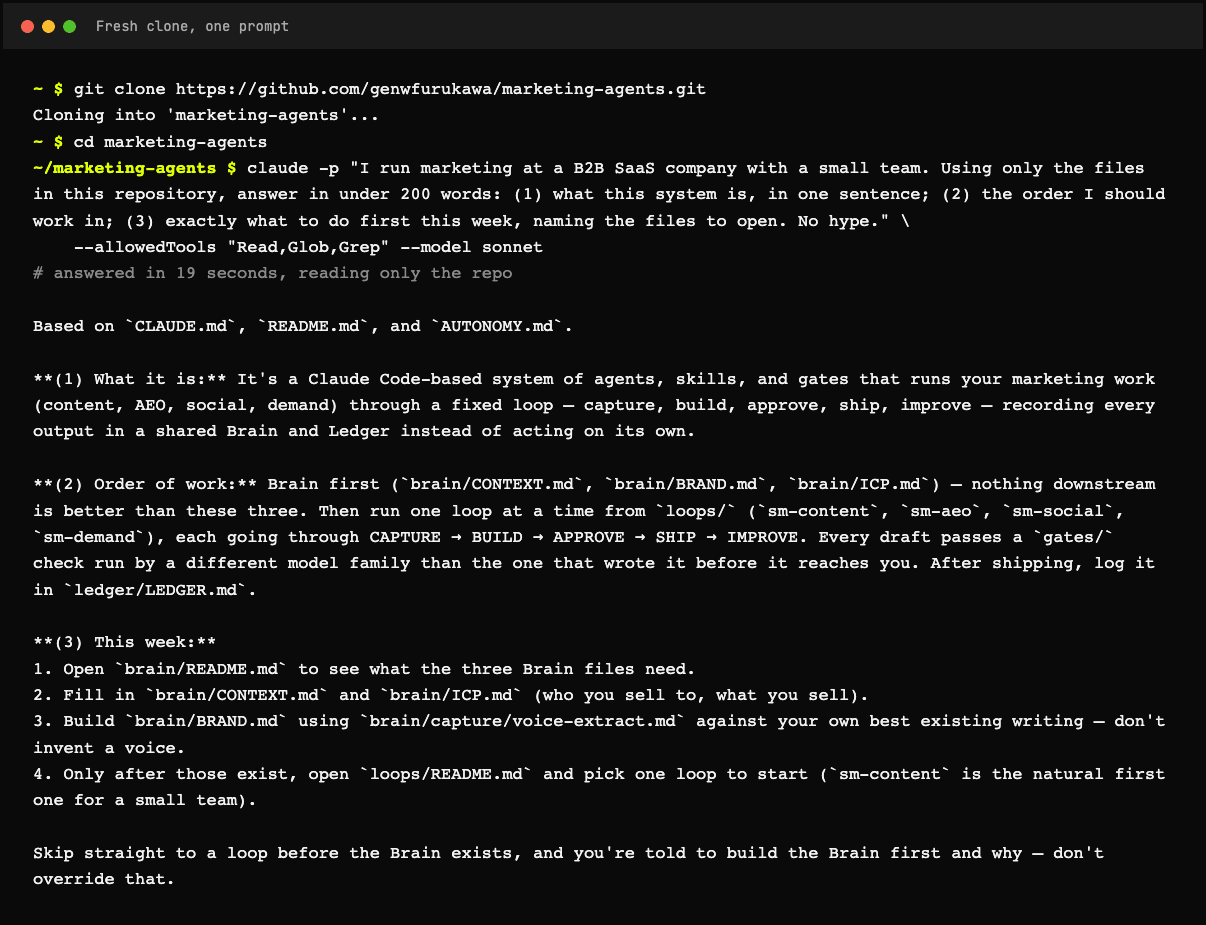
It got the order right: build the Brain first, then run one loop at a time, with the gates checking every draft before it reaches you. It also warned against skipping the Brain, which is the same advice I give clients when we start, so the repo seems to explain itself reasonably well to people and to agents.
The second part of the experiment is still running, so I don't have results to share yet. I want to know whether publishing the repo changes what AI assistants say when someone asks what SuperMarketers does, what it costs and what evidence there is for hiring us. I'll ask those same questions again at day 14 and day 28 and keep an eye on stars and forks, which both started at zero. I'll write up whatever I find, even if nothing changes.
How to make it your own
- Get your own copy. Fork it if you want to keep it on GitHub (you'll need a free account). Forks of a public repo stay public. If you want yours private, download the ZIP instead and start a new private repo with those files.
- Build your Brain first. Create
CONTEXT.md,BRAND.md, andICP.mdin thebrain/folder using the capture guides. Nothing else works well until these exist. - Tune the gates to your standards. Add your own banned words to the voice rules in
brain/BRAND.md; the voice gate already checks every draft against them. Add the claims your legal team must see to the triggers ingates/risk.md. You can edit any file right in GitHub: open it, click the pencil icon, change it, and click Commit changes. - Pick one loop. Start with
loops/sm-content. Ignore the rest until it runs well. - Keep the ledger. Copy the template in
ledger/and fill it in each month. After a few months you'll have a record of what the system produced that you can show to other people.
How to add to it
Everything in the repo follows a consistent pattern, so adding to it mostly means copying an existing file and changing it.
- A new gate. Copy
gates/fabrication.md, keep the same headings (when it fails, why it exists, what the checker verifies, what it outputs), and write the rule you wish your team checked every time. - A new capture guide. Copy
brain/capture/founder-interview.mdand rewrite the questions for a different source: customer success calls, win/loss interviews, community threads. - A new loop. Copy one of the folders in
loops/and rewrite its README for your channel.
Want to send something back? Open an Issue to suggest it, or, if you've made the change in your fork, open a Pull Request. That's GitHub's way of saying "here's an edit I made, want it?"
How I published it without leaking client work
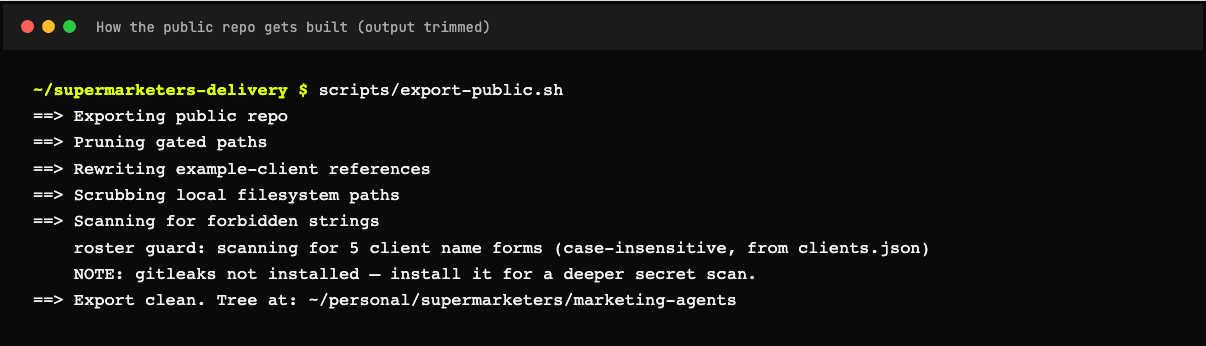
I don't edit the public repo by hand. A script builds it from my private version: it copies only approved folders, swaps the real example client for a fictional one, removes file paths from my computer, and scans for client names and secrets, stopping the export if it finds any. If you're thinking about open-sourcing your own system, I'd build something like that before anything else.
What isn't in it
The parts clients pay for are deliberately left out: running the system every week, deciding what's worth making, and the review layer that sits above the gates. There's also no scraper. The repo is useful on its own, but it won't make those judgment calls for you.
What's your proof-of-work?
That's the question Tim's post left me with, and I think it applies to anyone selling this kind of work. If you build marketing systems, it's worth showing one, and if you're hiring someone to build one for you, it's reasonable to ask to see inside theirs. Mine is at github.com/genwfurukawa/marketing-agents.
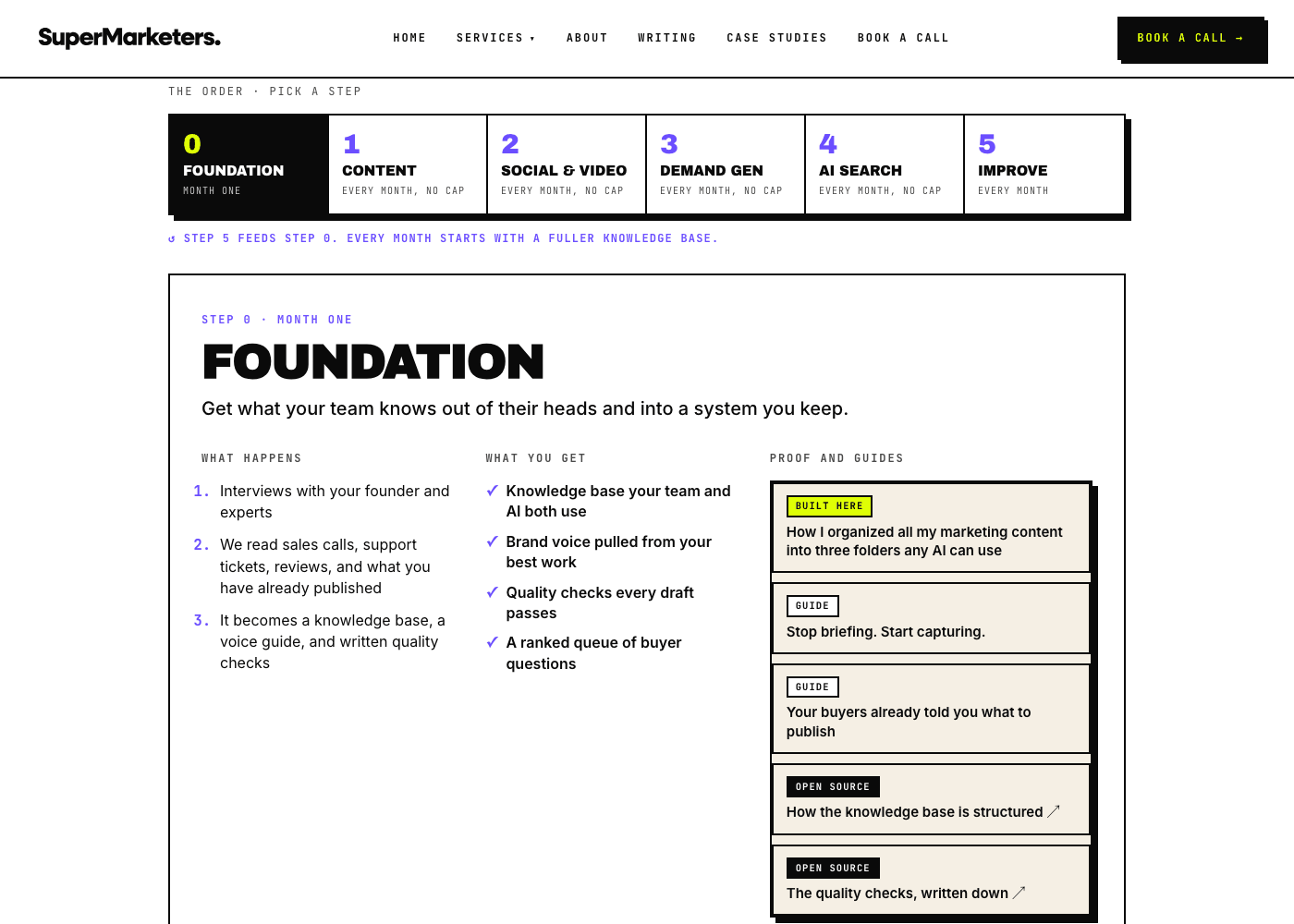
The How it works page walks through every step of an engagement, with client results and a link to the matching folder in the repo. If you'd rather have it run on your team's material, book a 30-minute call.